
Blockchain has emerged as one of the most important technologies in the digital world. Although it is best known as the technology behind cryptocurrencies such as Bitcoin, its potential extends far beyond digital currencies. Blockchain can be used to create secure, transparent, and decentralised systems for industries such as finance, healthcare, supply chain management, education, and more.
Blockchain Technology
Blockchain has emerged as one of the most important technologies in the digital world. Although it is best known as the technology behind cryptocurrencies such as Bitcoin, its potential extends far beyond digital currencies. Blockchain can be used to create secure, transparent, and decentralised systems for industries such as finance, healthcare, supply chain management, education, and more.
What Is Blockchain?
Blockchain is a type of digital ledger that records transactions or other types of information across a network of computers. Instead of storing information in a single central database, blockchain distributes copies of the ledger across multiple participants in the network.
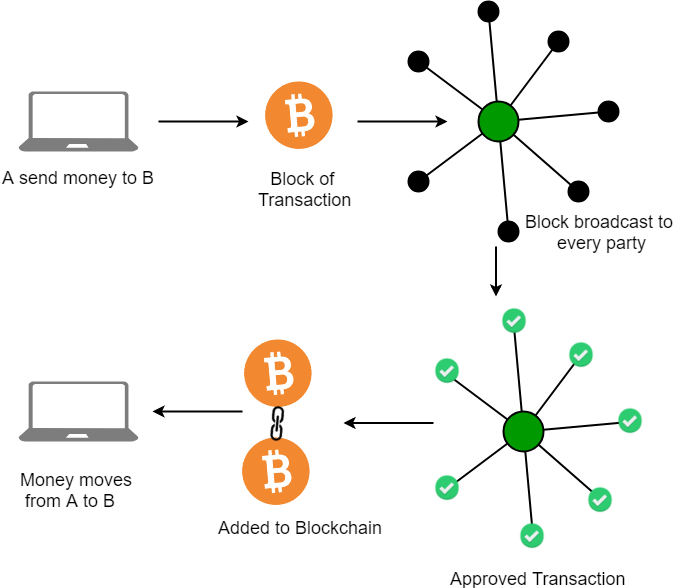
Information is grouped into blocks, and these blocks are connected together in chronological order to form a chain. Once information has been added to the blockchain and confirmed by the network, changing it becomes extremely difficult.
This structure provides several important characteristics, including transparency, security, and resistance to unauthorised modification.
How Does Blockchain Work?
The basic operation of a blockchain can be explained in several steps:
- A transaction or record is created
A user initiates a transaction or submits information to the blockchain network. - The transaction is broadcast to the network
The transaction is shared with computers, commonly known as nodes, participating in the blockchain. - The network validates the transaction
Depending on the blockchain, different consensus mechanisms are used to determine whether the transaction is valid. - Transactions are grouped into a block
Valid transactions are collected together into a new block. - The block is added to the blockchain
After reaching the required consensus, the new block is connected to the previous block. - The ledger is updated
Participants in the network update their copies of the blockchain.
This process allows a blockchain to maintain a shared record without necessarily relying on a single central authority.
Key Features of Blockchain
Decentralisation
Traditional databases are often controlled by a central organisation or server. Blockchain networks can distribute control across many participants, reducing dependence on a single central authority.
Transparency
Many public blockchains allow participants to view transaction records. Although users may not always be directly identified by their blockchain addresses, transactions can often be publicly verified.
Security
Blockchain uses cryptographic techniques to protect records and verify transactions. Each block is connected to previous blocks, making unauthorised changes easier to detect.
Immutability
Once information has been confirmed and added to a blockchain, modifying historical records can be extremely difficult, particularly on well-established decentralised networks.
Traceability
Blockchain can create a permanent history of transactions or events. This can be useful when organisations need to track the movement or ownership of assets.
Blockchain and Cryptocurrencies
Bitcoin was the first widely recognised application of blockchain technology. It demonstrated that digital transactions could be recorded on a decentralised network without requiring a traditional financial intermediary to maintain the ledger.
Other blockchain networks have expanded this concept by supporting programmable transactions and smart contracts. Smart contracts are programs stored and executed on a blockchain that can automatically perform actions when predefined conditions are met.
Applications of Blockchain
Blockchain technology has applications across many industries.
Financial Services
Banks and financial institutions can explore blockchain for areas such as payments, settlement, asset tracking, and digital assets. Blockchain can potentially reduce processing times and improve transparency for certain types of transactions.
Supply Chain Management
Companies can use blockchain to record the movement of products throughout a supply chain. This can help organisations track products from their origin to their destination and improve visibility across multiple parties.
Healthcare
Blockchain could be used to support secure sharing and verification of healthcare-related information. However, privacy, regulatory compliance, and data-storage requirements must be carefully considered.
Digital Identity
Blockchain-based identity systems can provide new approaches to managing digital credentials and verifying information without requiring every organisation to maintain separate identity records.
Education
Educational institutions could potentially use blockchain to issue and verify digital certificates and qualifications. This could make it easier for employers and other institutions to verify credentials.
Advantages of Blockchain
Blockchain offers several potential benefits:
- Reduced dependence on central authorities
- Improved transparency
- Strong cryptographic security
- Better traceability of records
- Automated processes through smart contracts
- Shared data across multiple organisations
However, these benefits depend heavily on how the blockchain system is designed and implemented.
Feature | Blockchain | Traditional Database |
Control | Decentralised | Usually centrally controlled |
Data Storage | Distributed across network | Usually stored on central servers |
Transparency | High, especially on public blockchains | Controlled by the organisation |
Challenges of Blockchain
Despite its potential, blockchain is not a solution to every problem.
Scalability
Some blockchain networks can face limitations when processing a very large number of transactions. Developers continue to investigate different approaches to improve performance.
Energy Consumption
Certain consensus mechanisms, particularly Proof of Work, can require significant computational resources. Other mechanisms, such as Proof of Stake, have been developed with different resource requirements.
Regulation
Blockchain and digital assets operate in an evolving regulatory environment. Organisations need to consider the laws and regulations that apply to their specific use case and location.
Privacy
Although blockchain can provide transparency, permanently recording information can create privacy concerns. Developers must carefully determine what information should be stored directly on-chain.
Complexity
Building and maintaining blockchain systems requires specialised technical knowledge. Poorly designed smart contracts or applications can also introduce security vulnerabilities.
The Future of Blockchain
Blockchain technology is continuing to evolve. New developments are focusing on improving scalability, interoperability, privacy, security, and usability.
The future of blockchain may not simply be about cryptocurrencies. Its broader value may come from creating systems where multiple organisations need to share and verify information without relying entirely on a single database owner.
As the technology matures, blockchain is likely to become one component within larger digital systems rather than a replacement for every existing database or application.
Conclusion
Blockchain provides a new approach to recording and sharing information through distributed digital ledgers. Its combination of decentralisation, cryptography, transparency, and traceability makes it useful for a wide range of potential applications.
While blockchain has significant potential, organisations should evaluate its benefits and limitations carefully before adopting it. The most successful blockchain applications are likely to be those where decentralised verification, shared ownership of data, or tamper-resistant records provide a genuine advantage over traditional technologies.
Ultimately, blockchain is more than just the technology behind cryptocurrency. It represents a different way of thinking about how digital information can be recorded, verified, and shared in a connected world.
Share Article


Related topics
Related courses
Supply Chain Management Diploma
13 Modules365 DaysFrom £1,299.00
View detailsLogistics Operations Certificate
12 Modules365 DaysFrom £749.00
View details